Welcome: Jiangsu Hongjing Metal technology Co.,Ltd







yolanda@hongjingmetal.com +86-15358997067
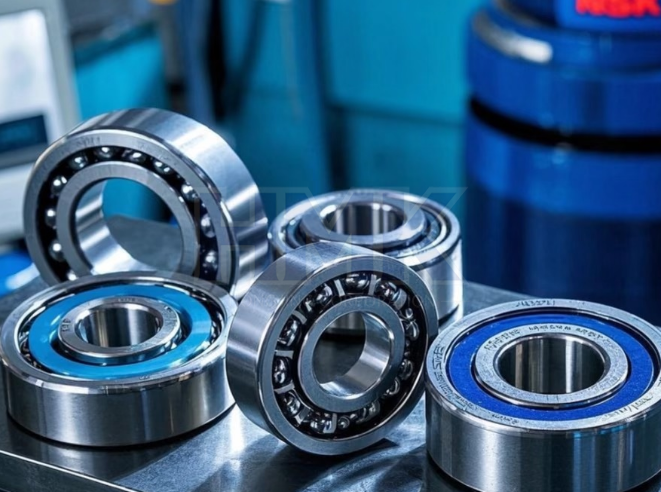
Introduction
Bearing noise and vibration performance is one of the most critical indicators for mechanical stability, operational comfort, and equipment service life.
Different industrial scenarios require strict control of bearing vibration and noise values to avoid equipment resonance, component wear, and operational failure.
Standard rolling bearings are classified into four vibration grades: Z1, Z2, Z3, and Z4, covering ordinary industrial use, precision machinery, low-noise equipment, and ultra-quiet high-end automation systems.
This guide explains the definition, performance differences, application scope, and selection principles of Z1/Z2/Z3/Z4 bearing vibration grades, helping global buyers choose the most cost-effective bearings for their equipment.
1. Definition of Bearing Vibration & Noise Grades
Vibration noise grades are formulated based on ISO and GB/T national standards, measuring bearing vibration acceleration values under standardized testing conditions.
Higher grades represent lower vibration, smoother rotation, lower noise, and stricter manufacturing tolerance control.
• Z1: Ordinary Vibration Grade
Basic qualified vibration level for general mechanical operation.
It allows normal slight vibration and acceptable running noise without strict quietness requirements.
• Z2: Improved Vibration Grade
Medium low-noise grade with optimized internal clearance, rolling element precision, and surface finish.
Vibration and noise are significantly reduced compared with Z1, ensuring stable continuous operation.
• Z3: Precision Low-Noise Grade
High-precision vibration control grade. Bearings feature ultra-smooth raceway surfaces, consistent rolling element roundness, and precise assembly, delivering extremely low vibration and m ute operation.
• Z4: Ultra-Low Vibration & Super Quiet Grade
Top-level industrial vibration grade with ultra-precision machining and 100% strict quality inspection.
Z4 bearings achieve nearly zero vibration, ultra-low noise, and excellent high-speed stability for high-end precision equipment.
2. Core Performance Comparison of Z1/Z2/Z3/Z4 Bearings
Z1 Grade
• Vibration level: Standard ordinary range
• Noise performance: Slight running noise, acceptable for conventional equipment
• Precision level: Basic industrial precision
• Stability: Suitable for low-speed and medium-load continuous operation
• Cost: Economical and cost-effective
Z2 Grade
• Vibration level: Controlled low vibration
• Noise performance: Soft running sound, no abnormal noise
• Precision level: Improved dimensional and rotational precision
• Stability: Stable under medium speed and frequent start-stop conditions
• Cost: Balanced performance and price for most industrial applications
Z3 Grade
• Vibration level: Low vibration with uniform operation
• Noise performance: Obvious mute effect, no resonant noise
• Precision level: High precision matching precision mechanical standards
• Stability: Excellent stability for high-speed continuous operation
• Cost: Mid-to-high cost for precision industrial equipment
Z4 Grade
• Vibration level: Ultra-low vibration, minimal mechanical fluctuation
• Noise performance: Super quiet running performance
• Precision level: Ultra-precision manufacturing standard
• Stability: Extreme stability for high-speed, high-precision, long-cycle operation
• Cost: Premium price for high-end industrial scenarios
3. Industrial Application Scenarios
Z1 Bearing Applications
Suitable for general industrial equipment with no strict noise requirements:
• Ordinary agricultural machinery
• Conveyor equipment
• Low-speed fans and blowers
• General mechanical transmission parts
• Civil ordinary mechanical accessories
Z2 Bearing Applications
The most widely used grade for standard industrial manufacturing:
• Ordinary motors and electrical machinery
• Packaging machinery
• Textile machinery
• Food processing equipment
• Medium-speed industrial transmission systems
Z3 Bearing Applications
Professional low-noise precision equipment scenarios:
• Precision industrial motors
• Automotive auxiliary equipment
• Medical conventional mechanical devices
• High-speed fans and ventilation systems
• Automated production line components
Z4 Bearing Applications
High-end ultra-quiet and precision industrial fields:
• Precision machine tools and CNC equipment
• High-speed servo motors
• Aerospace supporting parts
• Laboratory precision instruments
• High-end automation and robotics equipment
4. Professional Selection Principles
1. Match noise requirements with working scenarios
Ordinary industrial equipment selects Z1/Z2 for cost control; precision mute equipment must adopt Z3/Z4 to avoid vibration resonance affecting equipment accuracy.
2. Combine speed and load conditions
High-speed rotating equipment is prone to amplified vibration and noise. Prioritize Z3 and above high-precision vibration grades to extend bearing service life.
3. Cooperate with bearing tolerance and clearance grades
Vibration grades must match dimensional tolerance grades (P0/P6/P5/P4) and clearance grades (CN/C3/C4). High vibration grades paired with high precision ensure optimal mechanical performance.
4. Consider assembly and working environment
Dust, humidity, and long-cycle continuous operation will aggravate vibration noise. High-demand environments recommend Z3/Z4 sealed low-vibration bearings.
5. FAQ
Q1: Are Z4 bearings always better than Z3/Z2/Z1?
Yes in performance, but not necessary in all applications. Z4 bearings have high costs. Ordinary industrial machinery does not need ultra-high vibration grades, resulting in cost waste.
Q2: Can low vibration grades replace high vibration grades?
No. Low-grade bearings cannot meet the mute and stability requirements of precision equipment, easily causing abnormal noise, equipment vibration, and accelerated wear.
Q3: Do sealed bearings have better noise performance?
Generally yes. Sealed and shielded bearings prevent dust and particle impurities from entering the raceway, maintaining stable low-vibration operation for a longer time.
Conclusion
Z1/Z2/Z3/Z4 bearing vibration and noise grades form a complete industrial selection system from ordinary use to ultra-precision mute operation.
Reasonable selection can balance equipment stability, running comfort, and procurement cost.
For customized bearing grade matching, technical parameter support, and bulk wholesale solutions, welcome to contact our professional engineering team.
Contact: Yolanda
Phone: +86-15358997067
E-mail: yolanda@hongjingmetal.com
Add: No.88, Qianyao Road, Binhu District, Wuxi, China
LiveChatclose
 Send Email
 Skype
 WhatsApp