Welcome: Jiangsu Hongjing Metal technology Co.,Ltd







yolanda@hongjingmetal.com +86-15358997067
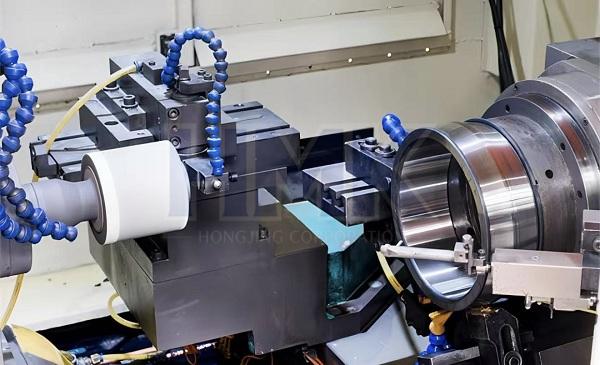
Bearing premature failure is a common problem in industrial equipment operation.
The main failure reasons include incorrect model selection, non-standard installation, poor lubrication, dust invasion, overload operation and long-term fatigue wear. Each failure mode has corresponding characteristics and improvement methods.
Through professional failure analysis, we can locate the root cause and provide targeted solutions to avoid repeated damage of bearings.
Bearing Failure Causes & Professional Solutions | Industrial Bearing Troubleshooting
1. Incorrect Bearing Model Selection
Failure Features
Insufficient load capacity, fast heating, short service life, frequent spalling on raceways. Many buyers only match shaft size while ignoring actual working speed, shock load and temperature environment.
Professional Solutions
• Calculate dynamic load rating according to real working load instead of only dimension matching
• Select high-temperature resistant bearings for heating equipment, insulated bearings for motors and EV transmissions
• Use reinforced spherical roller bearings for heavy shock load industrial machinery
2. Non-standard Installation Operation
Failure Features
Uneven rolling element indentation, shaft misalignment vibration, early seal cracking. Common improper operations: hammer striking bearing rings, mismatched fit tolerance, uncalibrated coaxiality.
Professional Solutions
• Adopt induction heater and hydraulic press for mounting; never hit bearing directly
• Control shaft and housing fit tolerance strictly per bearing type
• Adjust equipment coaxiality within 0.05mm to eliminate extra axial stress
3. Poor Lubrication Status
Failure Features
Abnormal high temperature, dry friction noise, carbonized grease deposits on raceways. Issues cover insufficient lubricant, wrong grease grade, overfilling or overdue oil replacement.
Professional Solutions
• Choose lubricant with dropping point higher than equipment maximum operating temperature
• Follow standard filling volume; avoid over-greasing heat accumulation
• Form regular lubricant replacement schedule based on dust and working temperature
4. Dust & Impurity Invasion Contamination
Failure Features
Abrasive scratch marks on rolling surfaces, running jitter, rust spots. Dust, metal chips, moisture and salt fog penetrate bearing interior through damaged seals.
Professional Solutions
• Upgrade double contact rubber seals for dusty, wet and outdoor operating conditions
• Clean shaft and housing thoroughly before installation to clear metal debris
• Use anti-rust packaging for spare bearings during warehouse storage
5. Long-term Overload Operation
Failure Features
Rapid surface flaking, sharp vibration rise, sudden bearing lock. Continuous over-rated radial/axial load or frequent impact load accelerates fatigue damage.
Professional Solutions
• Add auxiliary supporting parts for equipment with periodic shock load
• Strictly limit running speed under bearing rated limit speed
• Distribute load evenly to reduce single bearing bearing pressure
6. Natural Long-term Fatigue Wear
Failure Features
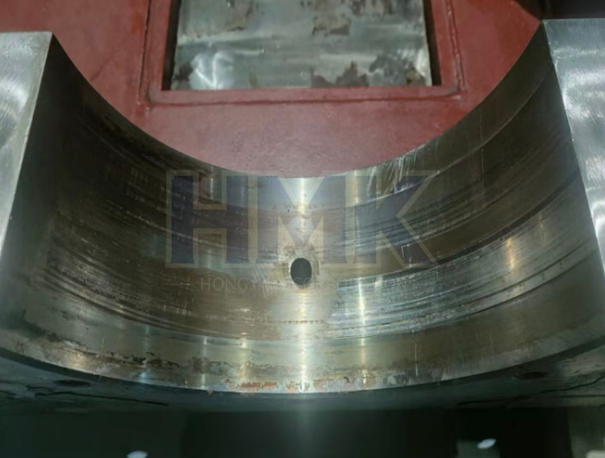
Uniform tiny peeling on raceways after long normal operation, slow noise increase. This belongs to normal service life loss instead of quality defect.
Professional Solutions
• Arrange periodic bearing inspection of temperature and vibration
• Replace bearings in advance when reaching calculated fatigue life
• Optimize lubrication cycle to slow down fatigue progress
Core Prevention Checklist
1. Match bearing model with actual load, speed and temperature demands
2. Complete standardized installation with dedicated professional tools
3. Maintain regular and correct lubrication management
4. Equip matching sealing structure to block dust and moisture
5. Avoid long-term overload and over-speed running
6. Implement regular equipment inspection for early risk detection
Conclusion
Most bearing premature failures come from improper application rather than product quality defects. Complete failure analysis helps enterprises eliminate repeated bearing damage effectively. Reasonable model matching, standardized assembly and daily maintenance can extend bearing service life greatly and lower equipment maintenance costs.
Our engineering team supports one-stop bearing selection and failure analysis technical consultation for all industrial transmission scenarios.
Contact: Yolanda
Phone: +86-15358997067
E-mail: yolanda@hongjingmetal.com
Add: No.88, Qianyao Road, Binhu District, Wuxi, China
LiveChatclose
 Send Email
 Skype
Skype WhatsApp