Welcome: Jiangsu Hongjing Metal technology Co.,Ltd







yolanda@hongjingmetal.com +86-15358997067
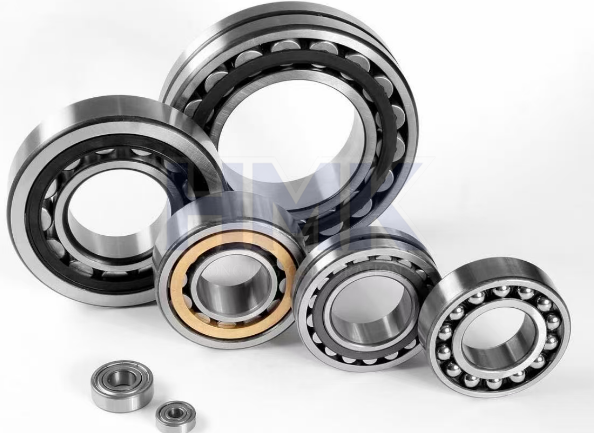
Bearing tolerance class is one of the most critical specifications that determines the precision, running stability, noise level and service life of rolling bearings. The ABEC tolerance standard, published by the Annular Bearing Engineers Committee, is one of the most widely recognized international grading systems for miniature and small-diameter bearings used in industrial machinery, automation equipment and precision components.
Bearing Tolerance Classes: ABEC 1 vs ABEC 3 vs ABEC 5 vs ABEC 7 Full Guide
Different ABEC grades represent different levels of dimensional tolerance, form accuracy, rotational accuracy and assembly requirements.
Selecting the correct tolerance grade helps reduce vibration, control noise, improve assembly accuracy and extend bearing service life.
For this reason, engineers and industrial buyers often need to confirm the ABEC grade before replacing an original bearing, especially when switching between SKF, NSK, FAG and other international brands.
This guide explains the differences between ABEC 1, ABEC 3, ABEC 5 and ABEC 7, and helps you choose the right precision grade for your industrial application.
1. ABEC 1 – Standard Precision Bearings
ABEC 1 is the basic tolerance grade for industrial bearings and is often described as commercial-grade precision. It offers the widest dimensional tolerance range among the standard ABEC grades, which makes it cost-effective and suitable for applications where extreme precision is not required.
ABEC 1 bearings are widely used in ordinary industrial equipment, conveyor systems, agricultural machinery, household appliances, low-speed gear motors and construction machinery auxiliary components. They provide stable performance under normal load and moderate operating conditions, while offering good tolerance for minor assembly errors.
Typical Application
• Conveyor systems
• Agricultural machinery
• Household appliances
• Low-speed transmission equipment
• Ordinary gear motors
• Construction machinery accessories
Key Advantages
• Low cost
• High availability
• Good versatility
• Suitable for non-precision industrial applications
2. ABEC 3 – Medium Precision Bearings
ABEC 3 is an upgraded tolerance grade compared with ABEC 1. It provides tighter dimensional control and improved rotational accuracy, making it a popular choice for general industrial automation equipment.
Many engineers choose ABEC 3 bearings when they need better running stability than ABEC 1, but without the higher cost associated with ultra-precision grades. ABEC 3 bearings are commonly used in automated production lines, packaging machinery, textile machinery, food processing equipment, medium-speed motors and general mechanical transmission parts.
Typical Applications
• Automated production lines
• Packaging machinery
• Textile machinery
• Food processing equipment
• Medium-speed motors
• General mechanical transmission components
Key Advantages
• Improved running stability
• Lower noise and vibration than ABEC 1
• Balanced cost and performance
• Suitable for mid-range industrial equipment
3. ABEC 5 – High Precision Bearings
ABEC 5 belongs to the high-precision bearing category. It requires stricter control over dimensional tolerance, inner and outer ring runout, rolling element accuracy and assembly quality.
Because of their higher precision, ABEC 5 bearings are widely used in applications that require smooth rotation, low vibration and long-term stable operation. Common areas include CNC machine tools, precision automation robots, high-speed fans, medical equipment, printing machinery and precision instrument transmission systems.
Typical Applications
• CNC machine tools
• Precision automation robots
• High-speed fans
• Medical equipment
• Printing machinery
• Precision instrument components
Key Advantages
• High rotational accuracy
• Low vibration and noise
• Improved equipment performance
• Suitable for high-speed and high-precision machinery
4. ABEC 7 – Ultra-High Precision Bearings
ABEC 7 is one of the highest civilian industrial precision grades in the ABEC system. It represents extremely tight tolerance control and superior rotational accuracy, designed for ultra-high-speed and ultra-precision applications.
ABEC 7 bearings are typically used in high-end CNC precision machine tools, high-speed spindles, precision medical instruments, aerospace auxiliary equipment and laboratory precision instruments. Because of their high manufacturing requirements, ABEC 7 bearings are usually more expensive and require more precise installation conditions.
Typical Applications
• High-speed spindles
• High-end CNC precision machine tools
• Precision medical instruments
• Aerospace auxiliary equipment
• Laboratory precision equipment
• Ultra-high-speed rotating systems
Key Advantages
• Ultra-high precision
• Extremely low vibration
• Ultra-low noise
• Excellent stability at high speeds
How to Choose the Right ABEC Grade for Your Application?
Choosing the correct ABEC grade is not simply a matter of selecting the highest number.
Higher precision usually means higher cost, tighter installation requirements and smaller assembly tolerances.
For ordinary low-speed equipment, ABEC 1 or ABEC 3 is often sufficient.
For general automation machinery, ABEC 3 is a practical choice.
For high-speed machines, CNC equipment and precision robots, ABEC 5 is commonly required.
For ultra-precision applications such as high-speed spindles and precision medical devices, ABEC 7 may be necessary.
When replacing SKF, NSK, FAG or other branded bearings, always confirm the original tolerance grade first.
Using a different ABEC grade may result in assembly problems, reduced running accuracy, increased noise or shortened bearing life.
Common Mistakes When Selecting Bearing Tolerance Classes
1. Choosing a Higher Grade Than Needed
Selecting ABEC 5 or ABEC 7 for ordinary low-speed equipment rarely improves performance. It usually increases cost without practical benefit.
2. Ignoring the ABEC Grade During Brand Replacement
When replacing an original bearing with an equivalent from another manufacturer, the ABEC grade must be verified. Different brands may use different tolerance codes, so the buyer should confirm the actual precision class before ordering.
3. Providing Only Dimensions Without Tolerance Information
Many buyers send only bearing dimensions or a partial model number without specifying the ABEC grade. This increases the risk of receiving incorrect bearings that do not match the equipment requirements.
4. Overlooking Assembly Accuracy
A high-precision bearing will not deliver its full performance if the shaft, housing or assembly method does not meet the required accuracy standards. Bearing tolerance class must be compatible with the overall system precision.
Get Your Custom Bearing Tolerance Solution
We supply a full range of industrial bearings in ABEC 1, ABEC 3, ABEC 5 and ABEC 7 precision grades.
Our products are manufactured to meet international industrial standards and support custom precision processing, bulk supply and OEM replacement for SKF, NSK, FAG and other bearing brands.
To receive an accurate quotation, please provide your bearing model, operating conditions, required tolerance grade and application details. We will reply with a formal quotation and professional bearing selection suggestions within 24 hours.
Related Articles
• Learn more about sealed and shielded bearing differences for better bearing protection.
• Check our complete bearing quotation guide to get accurate customized bearing solutions.
Contact: Yolanda
Phone: +86-15358997067
E-mail: yolanda@hongjingmetal.com
Add: No.88, Qianyao Road, Binhu District, Wuxi, China
LiveChatclose
 Send Email
 Skype
 WhatsApp